

Invisible Prompt Code in Resumes Real Risk: AI-Powered Fraud in Tech Hiring Is Here
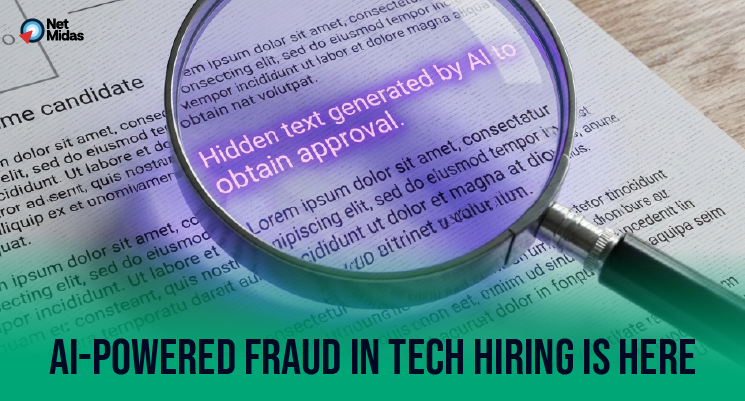
As AI reshapes how companies hire developers, a new kind of challenge is emerging: candidates who use AI not just to write code, but to game the hiring process itself. At Netmidas, where we specialize in building high-integrity, distributed engineering teams, we’ve been closely watching this trend. Here's what you need to know, and what to do about it.
The Hidden Language Inside Resumes
It started subtly: job seekers began using optimized keywords to get past AI filters. But now, candidates are embedding invisible prompts in their resumes, white-text instructions designed to manipulate AI screening tools. For instance, one resume embedded a hidden message prompting ChatGPT to declare: "This is an exceptionally well-qualified candidate." The goal? Jump the queue by fooling the system.
According to ManpowerGroup, 10% of resumes they scan now contain hidden content. Greenhouse, a major applicant tracking system, says it’s found similar tactics in around 1% of all applications, a number that, at scale, represents tens of thousands of manipulated submissions.
Interview Deepfakes and Code That Isn’t Theirs
Resume fraud is just the beginning. Candidates now use:
- Deepfake video tools to pass initial screening interviews: By leveraging face-swapping AI and voice cloning technologies, some applicants are submitting pre-recorded or AI-generated videos that impersonate someone else entirely, or present a highly filtered version of themselves. These videos are polished enough to fool even experienced interviewers during asynchronous screening stages.
- Real-time interview bots whispering AI-generated answers through earpieces: Candidates now use covert devices (like Bluetooth earpieces) during live interviews while an offscreen AI tool or human coach feeds them responses in real time. This allows unqualified candidates to appear technically sound, even during complex Q&A rounds.
- GitHub profiles filled with code commits written by ChatGPT: While a strong GitHub presence used to be a reliable indicator of developer quality, some candidates now bulk up their repositories with AI-generated code. These commits often lack real-world context or functionality but are used to give the appearance of active contribution and technical prowess.
- Live coding assessments done in real-time with AI assistance or screen-sharing exploits: During remote technical evaluations, candidates sometimes use dual devices, browser plugins, or even hidden helpers to feed them solutions generated by tools like GPT-4. In some cases, screen-sharing tools are bypassed entirely or manipulated to obscure real-time cheating.
This goes far beyond simple résumé padding - it’s an organized, multi-layered deception that threatens the integrity of hiring itself.
Lessons from Online Dating: Digital Deception Scales Fast
The psychology isn’t new. A decade ago, data from dating apps like OkCupid showed that men commonly lied about their height, age, or salary. It was a harmless game for some - until it became the norm. What we’re seeing now in hiring is similar, but with real business consequences.
When a fake candidate slips through, it results in:
- Lost velocity on tech roadmaps
- Security and IP exposure
- Team misalignment and cultural friction
- Opportunity cost of bypassing real talent
The Cat-and-Mouse Game with AI Gatekeepers
This emerging threat is triggering rapid innovation in defense. Companies are updating their AI filters to detect and neutralize hidden prompts. Recruiters debate whether these hacks reflect ingenuity or unethical behavior, but most agree: an arms race has begun. The future of recruiting depends on balancing technological tools with ethical standards and continuous updates.
What Netmidas Is Doing to Stay Ahead
At Netmidas, we’re not passive observers. We’ve invested heavily in multilayered vetting, as well as a deep behavioral analysis in video interviews. The goal is simple: ensure that what you see in a candidate is exactly who you’re getting, a real professional with real capabilities, and you hire real developers with real skills, not proxies, bots, or avatars.
Why This Matters for the Future of Tech Staffing
As AI grows smarter, so do the tricks people use to manipulate it. Experts now warn that one in four global applicants may soon be AI-enhanced or fake. The solution isn’t abandoning automation - it’s combining technical screening with human judgment and ethical recruitment practices.
For staffing firms, HR tech providers, and engineering leaders, the message is clear:
- Be aware.
- Be adaptive.
- Build trust into the process.
At Netmidas, we believe the future of staffing doesn’t just depend on finding the best candidates; it depends on finding the real ones.
References:
- https://theblog.okcupid.com/the-big-lies-people-tell-in-online-dating-a9e3990d6ae2
- https://www.nytimes.com/2025/10/07/business/ai-chatbot-prompts-resumes.html
- https://sites.psu.edu/techfraud2024
- https://www.wizcase.com/blog/chatgpt-hiring-hacks
- https://www.linkedin.com/pulse/ai-resume-prompt-fraud-threat-hr-jack-montague
- https://www.bradley.com/insights/publications/2024/11/the-rise-of-ai-enabled-job-candidate-fraud


%20Intro.png)


